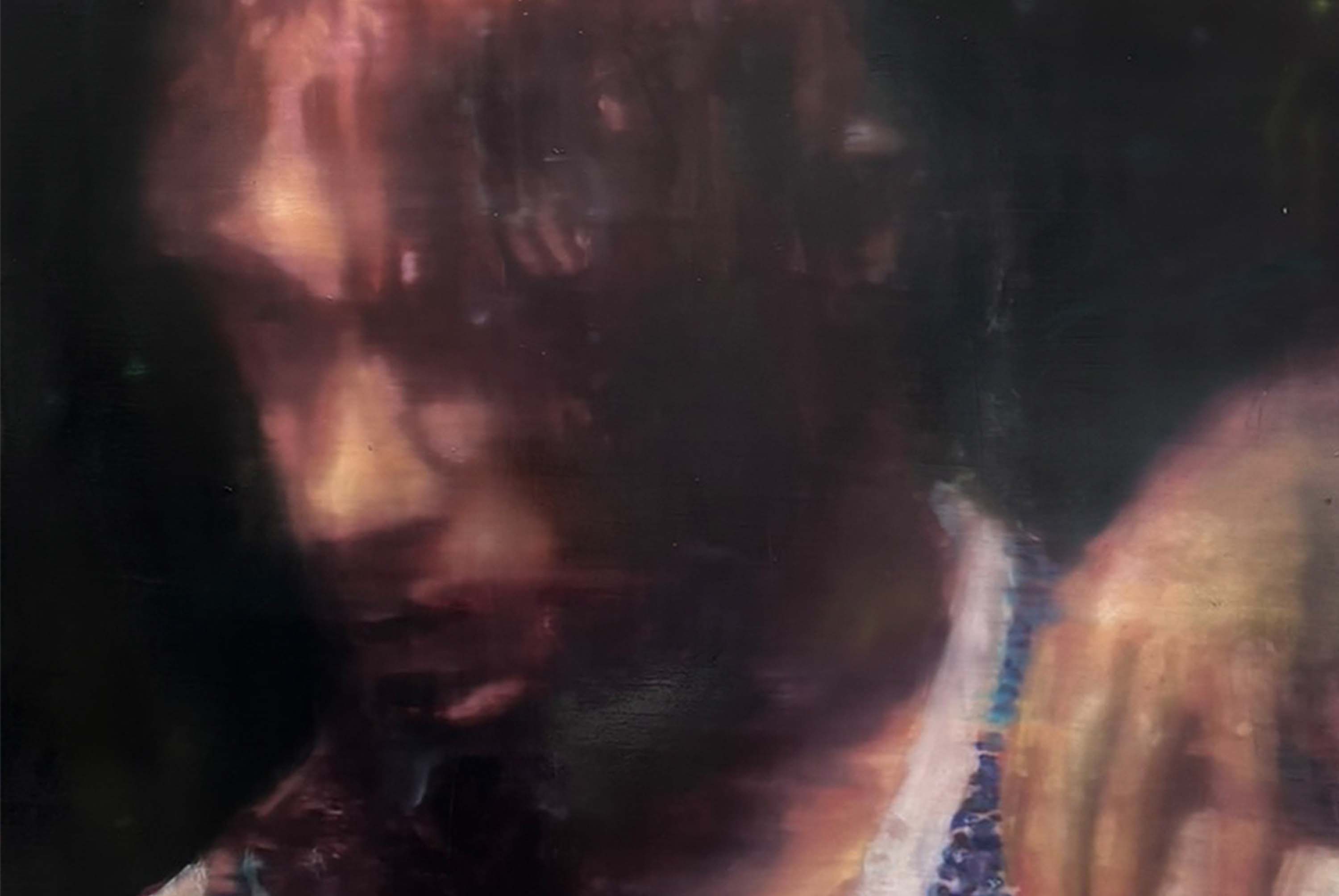
SETAREH is pleased to present The Sleepwalker, our first solo show of London-basedartist Harry Hugo Little. The works in this exhibition were painted in memory of the artist‘s brother, Julius Jake Little. Following this tragic loss, the unfettered emotions of the artist are impressed upon the viewer. Symbols of grief permeate the exhibition, acting as both traditional icons of memento mori and as personal beacons of remembrance. In doing so, The Sleepwalker showcases how Harry Hugo Little mixes a cultural lexicon of symbols with an individual process of grieving.
Depictions of shadowed figures and lit candles evoke life and mortality in the same picture; a figure that is there but also receding, candles that must be lit by the living in order to honor the dead. Skulls and snakes widen the palette of motifs, engaging with storytelling wherein morality is mystified.
Harry Hugo Little begins with slabs of wood that tactically function like blank slates, each piece as unique as the memories that are tied to each work. Anonymised by darkness, mysterious individuals in these paintings provoke fear and fascination as we trespass on their realm. Scenes that swell with the possibility of violence are glazed with a soft focus. Bodies writhe mid-brawl, bathed in theatrical lighting reminiscent of Baroque paintings. High contrast illuminates weapons and guns, revealing a physical beauty of these threatening objects. Harry Hugo Little unveils how desire can surpass a sense of danger. Earthly delights are weighed against the fragility of our body, mind, and world.
While Little’s subject matter is firmly rooted in the contemporary landscape, his stylistic devices draw from the Old Masters of the 17th century. In Saint, a man being thrown out of a nightclub kneels beneath the spotlight, held up by faceless figures. The luminous skin, suffering body, and limp stature recall Peter Paul Rubens’ Deposition from The Cross, a monumental altarpiece devoted to the expression of deep sorrow. The dramatic rendering of these contemporary scenes is made possible through the intensity of the artist’s love for a lost relative.
This collection of paintings also marks a new period of hope for Little, who writes “As the sun rises and the night dies, I can nearly see tomorrow, a day I thought I would never reach. The sleepwalker watches the horrors of the night. The sleepwalker waits for the dreams of tomorrow.” Little‘s words of renewal rise alongside notes of despair, a pattern that is reflected in the exhibited works. In a flower blooming and wilting and a snake shedding old skin, Harry Hugo Little chooses powerful images to convey that life is bound by cycles. Drawing also on rich religious iconography, the works oscillate between mourning and acceptance, capturing the emotional complexity of grief.
‘The Sleepwalker‘ is more like a personification of mourning than a represention of an archetype or alter ego- The death of a loved one is a drastic change in reality, so intense that the world starts to feel unreal. From anatomical studies on loose pages to biblical murals, artists have repeatedly turned to art to document, unravel, and find meaning through hard times. As life is lived, humanity always comes back to revisit what makes us human, what stories we can learn from, and the ideas that perservere even after death.
The artist lives and works in London. Selected group exhibitions include: breach, SETAREH, London, UK (2026); Being without being is Blue, Soho Revue, London, UK (2025); Winter, HAGD Contemporary, Aalborg, DK (2025); Smoking Gun, Pop Gun, New York, US (2024); Seven Sins, MOYA Museum, Oosterhout, NL (2023); and Wide Eyed, D’Stassi Gallery, London, UK (2023).
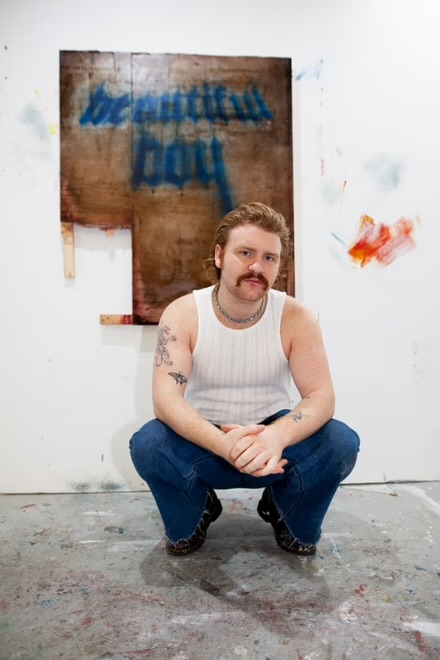
Image credit: Brynley Odu Davies
Thank you! Your submission has been received!
Oops! Something went wrong while submitting the form. Please try again.